
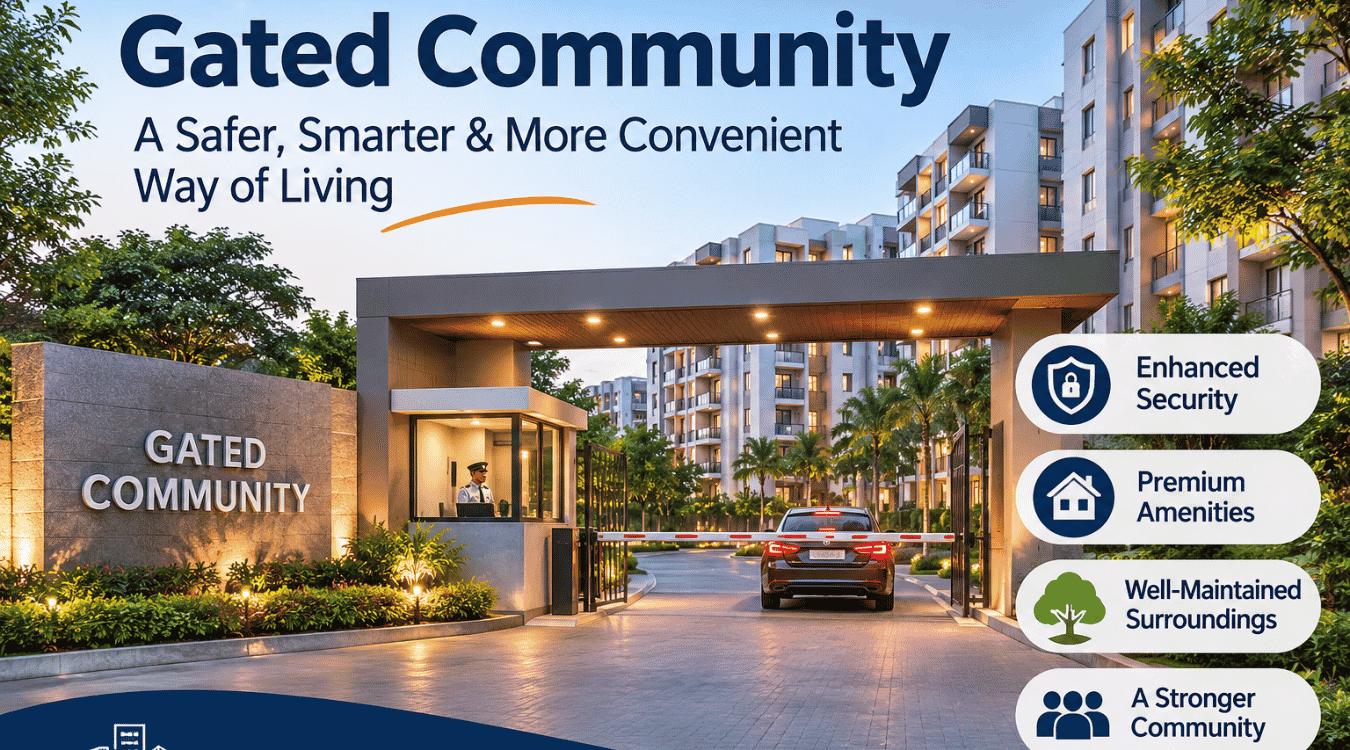
Choosing the right home involves more than just location, price, and size. Today, homebuyers also consider safety, privacy, lifestyle, and the quality of the surrounding environment. This is one reason why Gated Community living has become increasingly popular among homebuyers and property investors in India.
From controlled entry points and security systems to shared amenities and well-maintained common spaces, gated communities offer a residential experience designed around convenience and community living.
But what exactly is a gated community? What benefits does it offer, and what should you check before buying a property in one?
In this guide, we will explore everything you need to know about gated community living, including its features, advantages, limitations, and important factors to consider before making a decision.
What Is a Gated Community?
A Gated Community is a residential development with restricted entry and exit points, usually protected by boundary walls, security personnel, gates, or electronic access systems. Only authorised residents, visitors, and service providers are permitted to enter the premises.
These residential developments may include apartments, villas, independent houses, or residential properties. They are generally designed to provide residents with a more organised, secure, and convenient living environment.
Unlike traditional residential neighbourhoods, where public access is generally unrestricted, gated communities follow specific entry rules and community guidelines.
Most modern gated communities also provide shared facilities such as parks, swimming pools, gyms, clubhouses, children’s play areas, and dedicated parking spaces.
What Are the Key Features of a Gated Community?
A gated community is more than a residential property surrounded by walls. It typically includes several facilities and systems that support comfortable community living.
Here are some common features:
1.Controlled Entry and Exit
Security gates and access-control systems help monitor who enters and leaves the residential premises. Visitors may need to register at the entrance or receive approval from residents.
2.Security and Surveillance
Many gated communities have security guards, CCTV cameras, intercom facilities, and visitor-management systems to improve security within the premises.
3.Shared Amenities
Residents may have access to facilities such as swimming pools, fitness centres, landscaped gardens, sports areas, and community halls.
4.Dedicated Parking
Organised parking areas help reduce vehicle congestion and improve convenience for residents and visitors.
5.Maintenance Services
Common areas, lifts, gardens, lighting, water systems, and other shared facilities are generally maintained through a residents’ association or appointed facility-management team.
6.Community Living
Residents share common spaces and participate in community activities, celebrations, and neighbourhood events, creating opportunities for social interaction.

Benefits Worth Knowing
Better Security
Round-the-clock guarding is the biggest draw. Staff monitor entry points and log visitor details. This lowers the risk of theft, trespassing, and unauthorized entry.
Privacy and Peace of Mind
Restricted access means fewer strangers on the premises. Families with children and elderly members often feel safer here than in an open neighborhood.
Shared Amenities
Residents get access to gyms, pools, parks, and clubhouses without maintaining them individually. Maintenance staff handle repairs and upkeep for the whole complex.
Stronger Community Living
These setups often host festivals, sports events, and resident meetings. This builds a sense of belonging among neighbors.
Easier Oversight for NRI Owners
NRI landlords who cannot visit India often prefer this format for their rental property. Security staff and RWA records make it easier to track visitor activity and monitor unauthorized occupants from a distance.
Things to Know Before You Choose
Maintenance Charges
Most complexes charge monthly or quarterly fees. These cover security, housekeeping, and common area upkeep. Ask for a clear breakup before signing any agreement.
RWA Rules
Every gated community has its own set of rules. These may cover visitor timings, pet policies, parking allotment, and noise restrictions. Read the RWA bylaws before you move in.
Entry and Exit Restrictions
Deliveries, cabs, and guests usually need prior approval or gate registration. This adds a small delay compared to an open neighborhood.
Resale and Rental Demand
A well-managed gated community usually attracts higher resale value and rental demand. Location, amenities, and RWA reputation all affect this outcome.
Distance from City Centers
Many large townships sit on the outskirts of cities like Gurgaon, Pune, and Hyderabad. Check commute time before you finalize your choice.
Conclusion
Yes, in most cases. NRI landlords managing property from abroad benefit from the added layer of security and record-keeping that a gated community provides. Visitor logs and RWA correspondence give owners visibility into who enters their property, which matters when the landlord cannot inspect it in person.
For NRI landlords with a flat in Bangalore, Chennai, or Gurgaon, working with a local property manager adds another layer of oversight. Renteel helps NRI landlords track maintenance requests, coordinate with RWA offices, and keep documentation organized, without the landlord needing to be present in India.
Frequently Asked Questions
Is a gated community safer than a regular neighborhood?
Generally, yes. Controlled entry, security staff, and CCTV monitoring reduce unauthorized access compared to an open neighborhood.
Do these complexes charge extra fees?
Yes. Most charge maintenance fees for security, housekeeping, and common area upkeep, usually billed monthly or quarterly.
Can tenants bring guests inside?
Yes, but most require guests to register at the gate or get prior approval from the resident.
Is this format good for renting out property?
Yes. These complexes often see higher rental demand due to security, amenities, and better upkeep compared to standalone buildings.
Do all such complexes offer the same amenities?
No. Amenities vary by size and budget. Larger townships offer more facilities than smaller apartment blocks.
Leave a Reply