
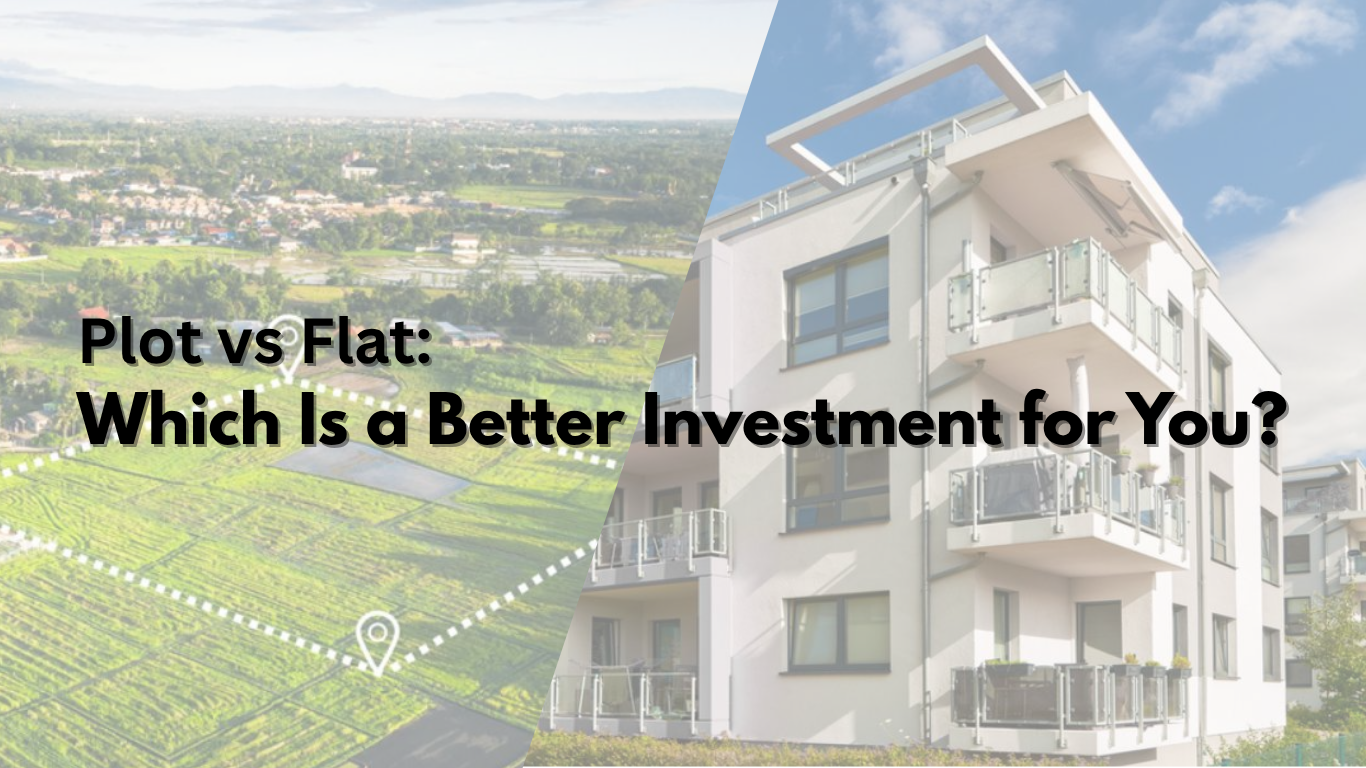
When it comes to real estate investment, one of the most common dilemmas that buyers and investors face is choosing between a plot vs flat. Both investment options have their unique benefits, challenges, and long-term implications. While a plot of land offers flexibility and potential for higher appreciation, a ready-to-move-in flat provides immediate usability and regular rental income.
So, which is a better investment for you, a residential plot or a modern flat? This comprehensive guide breaks down the pros, cons, and key differences to help you make an informed, strategic investment decision.
Definition of a Plot
A plot in real estate refers to a parcel of land that can be used for residential or commercial development. When you purchase a plot, you own the land entirely and can build on it as per approved building plans and local regulations. Plots typically offer flexibility and are more suited for long-term investments or future construction.
Key features of a plot:
- Full ownership of land
- No pre-constructed structures
- Requires separate investment for construction
- Higher appreciation in developing areas
Definition of a Flat
A flat, also known as an apartment, is a constructed residential unit within a larger building or housing complex. Flats are generally part of a real estate project with shared amenities such as security, parking, lift access, and water supply. Flats are usually ready to move in or under construction, making them attractive to homebuyers seeking immediate occupancy or rental income.
Key features of a flat:
- Pre-built structure
- Includes amenities and shared infrastructure
- Immediate possession (in case of ready-to-move-in flats)
- Better suited for short-term rental returns

Plot vs Flat Ownership and Legal Aspects
When it comes to the debate between Plot and Flat ownership, the legal aspects and ownership rights are crucial.
Plot Ownership:
- Owning a plot means you have full control over the land, giving you the freedom to build whatever you envision in the future.
- That said, land transactions can be tricky, often involving legal issues like title disputes, encroachments, and zoning laws.
- It’s essential for buyers to thoroughly check land records, mutation certificates, and get the necessary approvals from local authorities before making a purchase.
Flat Ownership:
- On the other hand, buying a flat means you own the apartment itself along with a share of the land beneath the building.
- The legal process for acquiring a flat tends to be more straightforward, thanks to RERA registration, builder agreements, and the rules set by housing societies that help create a more organized ownership experience.
- However, you do need to rely on the builder’s reputation for ensuring you get clear possession, timely delivery, and quality construction.
Verdict: In the Plot vs Flat ownership debate, plots offer more independence but come with a need for thorough legal checks, while flats provide a more structured ownership experience but with less control.
Investment Considerations in Flat vs Plot
The decision between Flat vs Plot is also influenced by investment goals.
Plot Investment:
- Plots typically appreciate faster, especially in emerging localities and near infrastructure projects.
- They are ideal for long-term investors who can wait for the property value to multiply.
- However, plots don’t generate rental income unless developed into a house or commercial unit.
Flat Investment:
- Flats provide steady rental income, making them suitable for investors seeking regular cash flow.
- Appreciation is slower compared to plots since buildings depreciate over time, but demand for housing in cities ensures steady value growth.
- Flats also offer tax benefits on home loans, which is an additional attraction for salaried buyers.
Verdict: Flat vs Plot investments differ — plots are better for capital growth, while flats are better for immediate income.
Cost Analysis for Flat vs Plot
Cost is another key factor in the Plot vs Flat decision.
Plot Costs:
- Generally lower entry cost compared to flats in the same locality.
- Minimal maintenance charges unless you build on the land.
- Additional costs may arise later if you decide to construct a home (building costs, permits, and interiors).
Flat Costs:
- Higher initial investment since flats include construction, amenities, and builder margins.
- Regular expenses such as society maintenance charges, repairs, and property taxes.
- Financing is easier with flats since banks prefer giving loans for constructed properties over empty plots.
Verdict: In Flat vs Plot cost analysis, plots are cheaper upfront but need future construction costs, while flats are costlier initially but come with financing and ready usability.
Lifestyle Considerations in Flat vs Plot
Beyond financial aspects, lifestyle plays a big role in the Plot vs Flat comparison.
Lifestyle in a Plot:
- Flexibility to design and build your dream home as per your taste.
- More privacy and independence if you build an independent house.
- Usually located in developing areas, which may lack immediate urban conveniences like malls, hospitals, and schools.
Lifestyle in a Flat:
- Flats offer ready-to-move housing with modern amenities like gyms, swimming pools, and security systems.
- Suitable for nuclear families, professionals, and those who value convenience.
- Limited customization options since the structure is fixed.
Verdict: In Flat vs Plot lifestyle considerations, flats offer convenience and community living, while plots provide independence and future flexibility.
Tax Benefits: Plot vs Flat
Plots:
Tax benefits apply only if you take a loan for construction on the plot, not for the land purchase itself.
Flats:
Significant tax deductions are available on principal repayment and interest under Sections 80C and 24 of the Income Tax Act.
Verdict: Flat vs Plot tax benefits clearly favor flats.
Key Differences: Plot vs Flat
| Feature | Plot | Flat |
| Ownership | Full ownership of land | Ownership is limited to the unit |
| Customization | High–design as per need | Low – fixed layout |
| Appreciation | Higher in the long run | Moderate; depends on building condition |
| Rental Income | No income until construction | Immediate rental income |
| Maintenance | Low if undeveloped | Recurring society and maintenance fees |
| Risk | Higher legal and encroachment risk | Lower with reputed builders |
| Liquidity | Slower to sell | Faster in cities |
Understanding the difference between flat and plot is essential to match your investment with your goals.
Best Option Based on Investor Profile
You Should Consider a Plot If You:
- Are a long-term investor focused on appreciation.
- Plan to build a custom home in the future.
- Want a low-maintenance investment.
- Are comfortable handling legal checks and construction management.
You Should Consider a Flat If You:
- Want immediate possession or rental income.
- Prefer the ease of a pre-constructed unit.
- Need home loan tax benefits under Sections 80C and 24(b).
- You are a first-time homebuyer looking for convenience.
Your ideal choice depends on your financial capacity, investment horizon, and lifestyle preferences. The key is aligning your decision with your personal goals, not market trends alone.
Conclusion
In the plot vs flat debate, the right choice depends on your investment goals, risk tolerance, and how involved you want to be in the property. If you’re focused on long-term capital appreciation and want the freedom to design and build, a plot could be the ideal option. It offers flexibility, lower maintenance, and strong growth potential, especially in emerging areas.
On the other hand, if you prefer immediate usability, steady rental income, and a low-effort investment, a flat is more suitable. Flats come with built-in infrastructure, amenities, and financing options, making them a practical choice for many buyers, especially those new to real estate.
Both plots and flats have their unique advantages and trade-offs. The best investment for you will depend on your priorities, location preferences, and financial strategy. Be sure to do your research, assess future growth potential, and seek expert guidance.
Whether you choose to invest in a plot or a flat, for the best property deals and personalized advice, contact Arbor Realty, your trusted partner in real estate investment.
Frequently Asked Questions
1. What is the main difference between a flat and a plot?
A plot is a piece of land with no construction, while a flat is a built-up unit within a building, ready for occupancy or rent.
2. Which is better for long-term investment?
Generally, plots offer better long-term appreciation, especially in growing suburbs and new development zones.
3. Can I get a loan for a plot?
Yes, but plot loans have stricter conditions. Construction must usually begin within a specified timeframe.
4. Which has better rental potential—plot or flat?
Flats have better rental potential since they are ready to be occupied. Plots offer no rental yield until developed.
5. Is the maintenance cost lower in plots compared to flats?
Yes, plots have lower or negligible maintenance costs, especially when vacant.
Leave a Reply