
In the world of real estate and urban planning, Floor Space Index (FSI) is a crucial term that governs how much construction is allowed on a given piece of land. Whether you’re a property buyer, investor, developer, or architect, understanding FSI is essential for making informed decisions.
In this blog, we’ll explore the meaning of Floor Space Index (FSI), how it’s calculated, the factors that influence it, and why it’s so important in city planning and property development.
What is Floor Space Index (FSI)?
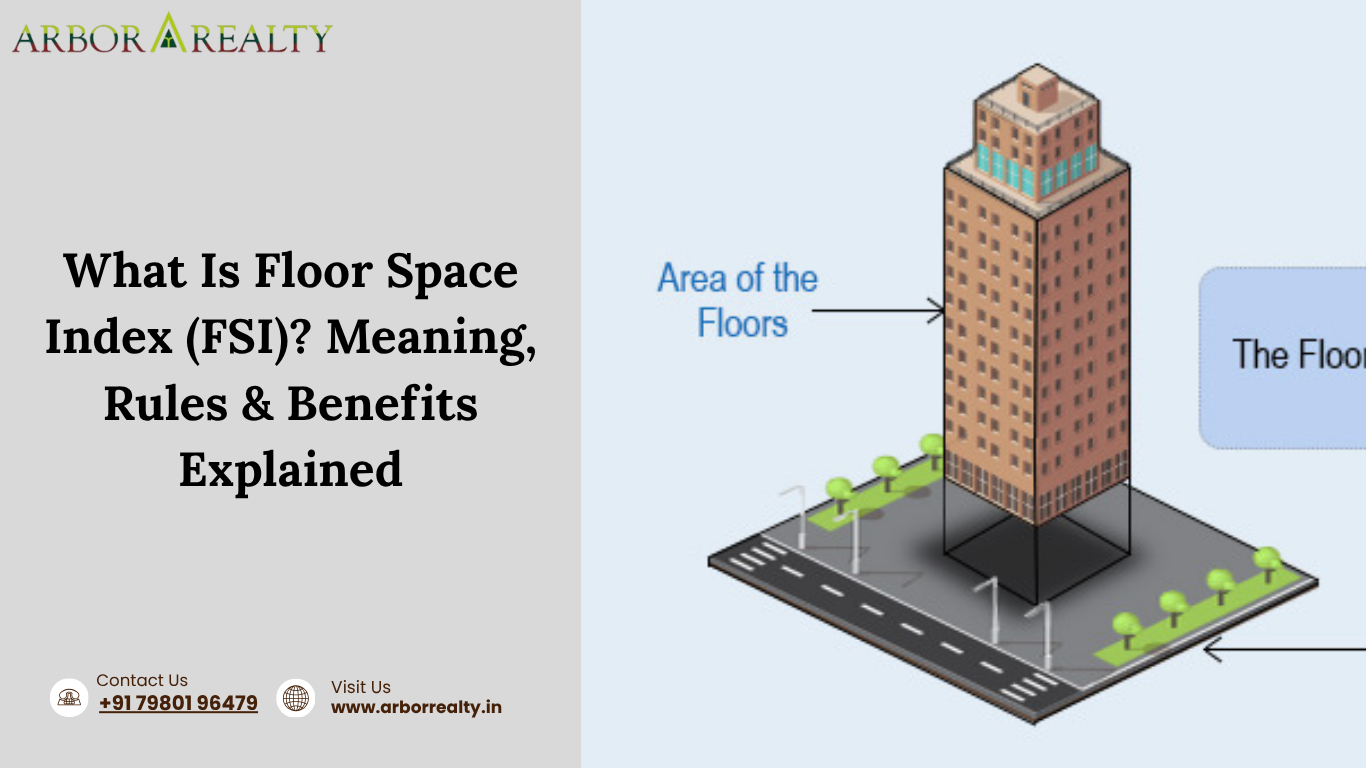
FSI stands for Floor Space Index and defines the ratio of a building’s total constructed floor area to the size of the plot it occupies. In construction, FSI actively determines how much floor space you can build based on the land area available.
Builders and planners use FSI to control development density and ensure organized urban growth. A higher FSI allows you to construct more floors or larger spaces, while a lower FSI limits the built-up area. In many regions, people also refer to FSI as FAR, or Floor Area Ratio.
FSI Formula:
FSI = Total Built-Up Area / Total Plot Area

For example, if a plot measures 1,000 square meters and the FSI is 2.0, the builder can construct up to 2,000 square meters of built-up area.
How to Calculate Floor Space Index
Let’s say you own a plot of 500 square meters. If the local municipal authority allows an FSI of 1.5, your permissible built-up area would be:
FSI Calculation:
1.5 × 500 = 750 square meters
This 750 square meter space can be distributed across multiple floors as per design needs and zoning rules. For instance, you could build a three-storey structure with 250 square meters per floor.
Understanding how to calculate FSI is crucial for both developers and buyers to assess the potential of a property.
Why FSI Matters in Real Estate Development
FSI directly influences the size, height, and density of buildings. Here’s why FSI in construction is a vital concept:
- Zoning Compliance: Local development authorities use FSI to regulate building intensity and maintain infrastructure balance.
- Project Planning: Builders use FSI to optimize designs within legal limits.
- Valuation: Land with higher permissible FSI is often more valuable due to greater development potential.
- Urban Planning: FSI helps control overcrowding, manage traffic, and allocate resources efficiently.
Whether you’re designing a residential building, commercial tower, or industrial park, FSI for residential buildings and other types will vary, so it’s crucial to understand applicable limits.
Factors That Impact the Permissible FSI
FSI is not the same everywhere. It depends on several local and regulatory factors, including:
- Zoning Regulations: Residential, commercial, industrial zones have different FSI limits.
- Plot Location: Central urban areas may have higher or lower FSI based on congestion.
- Road Width: Wider roads often allow higher FSI.
- Land Use Category: Mixed-use zones typically offer higher FSI.
- Building Type: High-rises may get special FSI exemptions or bonuses.
- Proximity to Infrastructure: Areas near metro stations or highways may be eligible for increased FSI.
- Municipal Policies: Each city has its own Development Control Regulations (DCR).
Key Benefits of FSI Regulation
Well-defined FSI regulations offer several advantages to the city, its residents, and developers:

1. Promotes Efficient Land Use
Higher FSI allows developers to make the most of expensive urban land, especially in metros.
2. Encourages Vertical Growth
Instead of spreading cities outward (urban sprawl), higher FSI promotes upward growth, reducing commute times and saving infrastructure costs.
3. Maintains Urban Infrastructure Balance
By limiting how much can be built, FSI helps prevent roads, drainage, electricity, and water systems from becoming overburdened.
4. Improves Housing Supply
Higher FSI can lead to more housing units being built, helping control property prices and meet demand.
5. Brings Transparency in Development
FSI rules set clear expectations for developers, minimizing disputes and legal complications.
Impact of Floor Space Index on Property Value and Construction Costs
Property Value:
- Higher FSI increases land value, as it allows more floor area to be built and sold.
- In commercial areas, a higher FSI directly translates to more rentable space and higher returns.
Construction Costs:
- Higher FSI may lead to higher construction costs due to taller buildings requiring deeper foundations, better materials, and advanced structural systems.
- Developers may have to pay premium FSI charges to local authorities, increasing overall project costs.
However, the return on investment (ROI) is usually higher when FSI is well-utilized.
Limitations and Challenges of FSI Implementation
Despite its benefits, implementing FSI comes with certain challenges:
1. Inconsistent Regulations
Different states and even cities have varying FSI norms, creating confusion for developers and investors.
2. Overburdened Infrastructure
If FSI is increased without upgrading roads, drainage, and utilities, it can lead to urban chaos.
3. Environmental Concerns
Higher FSI often leads to more concrete and less open space, impacting green cover and drainage.
4. Misuse and Violations
Some developers illegally exceed the permitted FSI, leading to unauthorized constructions and legal issues.
5. Lack of Public Awareness
Many landowners and small developers are unaware of FSI regulations, leading to missed opportunities or compliance issues.
Conclusion
Floor Space Index (FSI) is more than just a technical term, it’s a fundamental part of real estate development and urban planning. It determines how our cities grow, how much we can build, and how efficiently land is used.
Understanding FSI helps all stakeholders,from homebuyers to builders ,make better decisions, comply with legal norms, and contribute to sustainable urban living.
Whether you’re planning to invest in a property or develop one, always check the applicable FSI and factor it into your planning process.
Floor Space Index: Frequently Asked Questions
1. Is a higher FSI always better?
Not necessarily. Higher FSI allows for more floor space but also leads to greater density, which may strain infrastructure if not managed properly.
2. Can FSI be increased?
Yes, in some cities you can increase FSI by paying a fee (Premium FSI) or using TDR options, subject to local rules.
3. What happens if a building exceeds the allowed FSI?
Exceeding FSI can lead to penalties, demolition orders, and loss of approvals. It’s vital to follow approved FSI limits strictly.
Leave a Reply